If you are looking for the Scientific Bases for frugivour Vegetarianism, I suggest, instead, that you look for the science bases of the human dietetic character.
As perhaps you know science is the systematic observation, study and organization of phenomena and knowledge to the end that it might be applied for human benefit.
So, that which does not work is not scientific and that which does is obviously scientific.
For instance, observation of animals in “nature” reveal them to be healthy, fit and sickness-free.
They have no science – they live by their instincts. Obviously living by instincts is scientific.
Do not humans have instincts? If so, would they not thrive by observing them to the extent possible within the context and circumstances of today’s modern life?
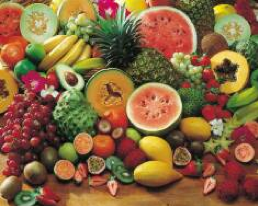
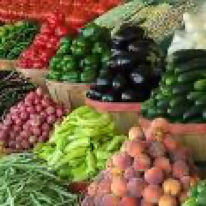
In all nature what do you find to be attractive to the eye, tantalizing to the sense of smell and a gustatory delight to consume just as delivered up by nature?
This consideration alone rejects all consideration of dietary categories except one. Aesthetically you’d appreciate only one type of food.
Obviously you can’t relish meats raw from dead animals. Obviously you can’t relish cows milk taken naturally. Obviously you are not a weed eater. Nor a grass eater, nor a leaf eater. Obviously you are not a graminivore.
Obviously you are not an insectivore.
Then what are you?
The only category of foods that attracts you in their “raw, natural state” is none other than “fruits”. And the nutritional science we teach is not in terms of the 5 or 4 which conventional nutrition teaches (really a division of the junk food marketplace, or the SAD, Standard American Diet), but the nutrients we need and where they can be aesthetically and effectively if not easily obtained.
These nutrients are glucose, amino acids, essential fatty acids, minerals and vitamins.
Practically every fruit you can name has everything you need in about the exact proportion that you body requires it, that is , aside from water and fiber which we also require from food, about 90% glucose, about 5% amino acids about 2% minerals, about 2% fatty acids and about 1% vitamins and miscellaneous food factors such as auxones and hormones.
The body digests all down to basic components, then absorbs and utilizes them.
The human natural food have a great advantage over other categories – they are symbiotic with our being – they are developed by nature to meet our needs ideally and they are even predigested!
If you want to read about food science I suggest that you read “Diet, Nutrition and Cancer” issued by the National Academy Press in 1982 and authored by members of the national Research Council. Chapter 13 tell you about the dire consequences of heating protein and fats.
Mutagens and carcinogens (really the same thing) are created which beget the multitude of diseases from which humans suffer.
I suggest that you look up milk researchers in the Index Medicus. Osteoporosis is rampant ONLY in milk drinking countries! Because milk’s calcium is bound up in its indigestible casein and because, when its broken down, its phosphorus and proteins bind more calcium than it has, milk is a negative calcium experience.
Calcium uptake is about 15% less in milk drinkers than in those who eat only fruits according to the researchers of Dr. Heaney of Creighton University, Omaha.
The Index Medicus is published annually by the Department of Health and Human Resources. It refers to articles and researches worldwide and constitutes as high as 25 volumes per annum.
The diet book I just referred to has over 100 researchers listed which document its position that cooked foods are mutagens and carcinogens.
There are virtues greater than being scientific – like thinking for yourself, understanding the world and being compassionate.
Science is not cold and detached – science really involves itself in human well-being – it involves itself in every facet of human welfare. Every nefarious scheme these days is done in the name of science.
I trust that, once you learn our true nature, that you’ll devote yourself to the propagation of what is true and good – what is really scientific.
“Destiny is not a matter of chance. It is a matter of choice: it is not a thing to be waited for, it is a thing to be achieved.” ~ William Jennings Bryan
LISTEN TO THE VIDEO BELOW
“Anthropologist, Dr. Alan Walker of John Hopkins University in Maryland has concluded that early humans were fruit eaters—not just fruit eaters but exclusively and only fruit eaters—eaters of nothing but fruit.
By careful examination of fossil teeth and fossilized remains of humans with the aid of electron microscopes and other sophisticated tools, Dr. Walker and other researchers are absolutely certain that our ancestors in relatively recent history were fruitarians.
Dr. Walker also traced humans through history as expanding to herbage and nuts, and finally meat. Although humans undertook omnivorous eating practices, our anatomy and physiology have not changed—we remain biologically a species of fruit eaters. A cursory study of biology reveals this even if written by meat-eating professors, which most of our Biologists are.
The human designation as a frugivore was removed from encyclopedias in 1952.”
~Michael J Mappin
The great taxonomist, Carolus Linnaeus (1707-1778), a Swedish naturalist and botanist who established the modern scientific method of classifying plants and animals, classified humans not as carnivores, not as omnivores, nor even as herbivores, but as frugivores.
“To say that humans have the anatomical structure of an omnivore is an egregiously inaccurate statement. Man’s structure, internal and external, compared with that of the other animals, shows that fruit and succulent vegetables are his natural food.”
~Carolus Linnaeus
“For generations, man has been ignorant of his/her body’s proper nutritional needs. It is not difficult to understand the proper foods man should be consuming, which is simply reflected in the physiological design of the human species.
Once called omnivores by many, humans are actually frugivores. Man’s diet should be predominantly fruits and vegetables, instead of dead animals, their milks, and dormant foods such as grains and beans.
If you had to kill the animal yourself and eat it raw…blood, guts and all, most people would never do it. Only carnivores do that. We are not carnivores.
Man still hasn’t figured out which species he is. We certainly are not carnivores, nor are we herbivores. The GI tract of a herbivore is 30x the length of their spine, they have four or more stomachs and their teeth are set to grind.
According to National Geographic and many other reputable sources, we are frugivores. Think about it. If you lose your teeth when you get older, you can chew fruit, but you cannot chew vegetables.
Sugar is the main need of the human body. Every cell in the body requires sugar. Sugar = carbon. That is why we call foods high in sugar, carbo-hy-drates (carbon chained constituents). Carbon and oxygen are essential, up OVER fats and proteins (amino acids). They are essential to create ATP. That is cell energy (charging the battery of the cell) which the body needs to thrive.
The body needs electric food. Since the body is carbon based, when it receives plant food that is carbon based, it is referred to as a chemical affinity. And because there is affinity, there is assimilation.
Set a bowl of fruit and another bowl of raw vegetables in front of a group of hungry children. See what’s left when they are done eating.
We’re meant for simple sugars, but complex sugars we are not.
We are meant for simple fatty acids, but fats we are not.
We are meant for amino acids, but proteins we are not.
Follow that line and understand that complex nutrition is not designed for homo sapiens, nor most species, in actuality.
Simplicity in digestion and absorption is key. Bottom line to most functions of the cell is energy.
All available scientific evidence indicates that humans are frugivorous, regardless of what others say.
Comparative anatomy, genetics, and science thousands of years ago shows our physiology is that of a frugivore.”
Robert Morse, ND
(A graminivore is a herbivorous animal that feeds primarily on grass, specifically “true” grasses, plants of the family Poaceae. Graminivory is a form of grazing. These herbivorous animals have digestive systems that are adapted to digest large amounts of cellulose, which is abundant in fibrous plant matter and more difficult to break down for many other animals.)